
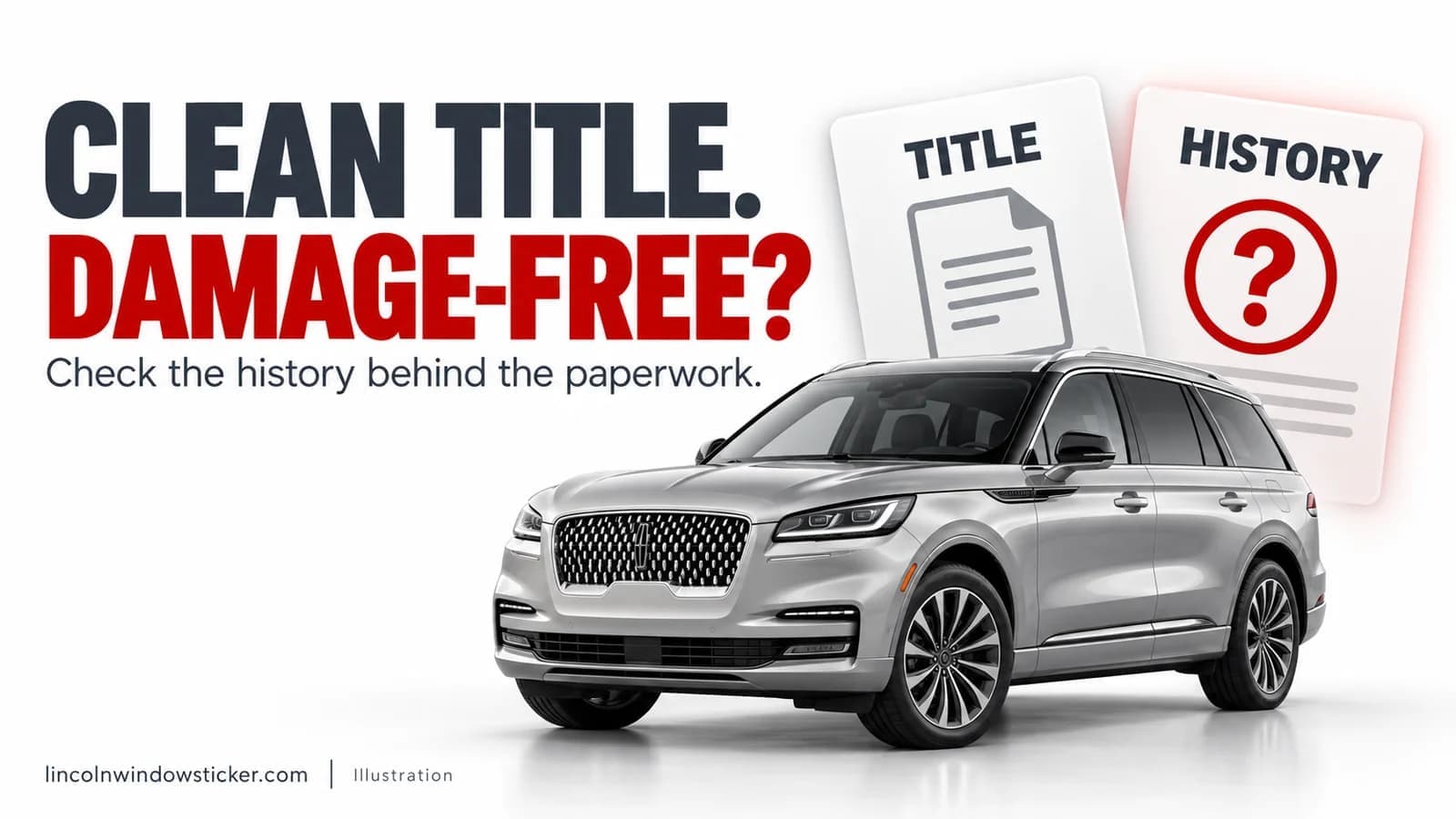
No. A clean title does not mean a used Lincoln has never been damaged. It generally means the title has no damage-related brand, such as salvage or rebuilt. A collision, repaired body panel, or other damage can exist without that designation.
Before buying, compare the title with a vehicle history report, ask for repair records, and arrange an independent inspection. These checks answer different questions. Together, they give you more useful information than the words “clean title” in an advertisement.
Key Takeaways
- A clean title describes title status; it is not an accident-free certificate.
- A history report can reveal recorded problems, but missing entries do not prove nothing happened.
- A window sticker helps verify original equipment, while an inspection checks the car as it is today.
Clean Title, Clean History, and Good Condition: The Difference
Sellers sometimes use these phrases as though they mean the same thing. Ask what each claim is based on before treating it as reassurance.
| Phrase In A Listing | What It Tells You? | What It Does Not Establish? |
|---|---|---|
| Clean title | The seller is claiming an unbranded title | No previous damage or repairs |
| No accidents reported | The consulted report has no reported accident entry | No accident ever occurred |
| Excellent condition | The seller’s description of the car | An independent assessment of repairs or safety |
| Original window sticker included | Factory equipment and pricing information is available | The vehicle’s accident history or current condition |
← Scroll horizontally to see more →
This article discusses U.S. vehicle titles. State terminology and branding rules differ, as elaborated by the NMVTIS consumer guidance. If a document uses an unfamiliar designation, ask the issuing motor vehicle agency what it means for that particular vehicle.
Keep the question specific: “Does the title show a brand?” is different from “Has this Lincoln been repaired after damage?” A seller can truthfully answer the first question without answering the second.
Why a Damaged Lincoln Can Still Have a Clean Title?
A title records particular legal designations, not every event in a vehicle’s life. These situations explain why you should investigate the history separately.
The Damage Did Not Trigger a Title Brand
A collision does not automatically produce a salvage title. Damage can be repaired without meeting the applicable requirements for branding. Ask what was damaged, which parts were repaired, and who completed the work. The useful evidence is the repair documentation and inspection, not simply whether the title still looks clean.
The Repair Is Missing from the Vehicle History Report
A repair only appears in a history report when information reaches the required databases. Work arranged privately may be absent, and recent events may not appear immediately. If the seller mentions repainting or a collision, investigate that disclosure even when the report has no corresponding entry for the same event.
State Rules Treat the Event Differently
States use different definitions and thresholds when assigning title brands. A vehicle’s age and the applicable rules can affect its paperwork. If an older Town Car has a total loss entry but an unbranded title, ask the issuing agency to explain the records rather than assuming either document is wrong.
The Current Title Does Not Tell the Whole Story
A current title should be compared with earlier title records, especially when a report shows a previous brand. Moving between states is not itself evidence of fraud. However, conflicting records need an explanation. Ask the issuing agency and report provider to clarify the discrepancy before relying on the seller’s description.
A Real Lincoln Buyer Asked This Exact Question
In a 2019 Lincoln Forums discussion, a buyer considering a 2005 Town Car Signature L described a report showing an accident, airbag deployment, and an insurance total loss. The seller was presenting the car with a clean title. The buyer wanted to understand how both could be true.
That account illustrates the uncertainty; it does not independently verify the car’s condition or establish how often this happens. The practical lesson is to investigate each record instead of letting a reassuring title description override a concerning history entry.
For your Lincoln, bring the actual documents to the appropriate source. The title agency can clarify title status. A repair facility can
What a Vehicle History Report Can Help You Check?
You can look up a Lincoln vehicle history to check available records for the VIN. Confirm the report offered and its coverage before purchasing; the basic vehicle preview is not the full history report. Read the detailed entries rather than stopping at the summary.
Depending on the provider and available records, useful items can include:
| Record Or Detail | Question To Ask |
|---|---|
| Accident or damage entry | What happened, when, and which area was affected? |
| Salvage, rebuilt, or flood brand | Which authority recorded it, and does it match the current paperwork? |
| Insurance total loss | What was the stated reason, and what happened afterward? |
| Mileage history | Do the readings form a consistent timeline? |
| Auction information or photographs | Do the VIN, date, and vehicle match the Lincoln being sold? |
← Scroll horizontally to see more →
An accident entry and a total loss entry are not interchangeable. A total loss can have different causes, including theft, so read the stated reason rather than imagining damage the report does not describe.
A short entry may leave important questions unanswered. “Damage reported” does not tell you exactly what was replaced or how well it was repaired. Request supporting documents and give them to the person inspecting the vehicle.
What “No Accidents Reported” Really Means?
“No accidents reported” means no accident appears in that report’s available records. This doesn’t prove that the Lincoln has never been damaged.
- Check the Date: Request the complete, current report for the correct VIN.
- Keep Seller Disclosures: Investigate disclosed repairs even when the report omits them.
- Clarify Conflicting Reports: Compare the specific entries and ask the provider to explain the difference.
Explore these Four Checks Before You Buy
Use this sequence to connect the paperwork with the actual Lincoln. Complete the checks before making a commitment based on an accident-free claim.
1. Match the VIN Across the Records
Compare the VIN on the Lincoln with the title, listing, and history report. Ask for clear photographs if you are shopping remotely. A report for another vehicle cannot support this purchase. Resolve any mismatch first, even if the model, color, and year otherwise appear to match the car being advertised.
2. Ask Direct Questions About Previous Damage
Ask whether the Lincoln has had collision repairs, water damage, repainting, or replaced body panels. Request invoices and available photographs from before the repair. If the seller does not know, record that uncertainty. Avoid treating “clean title” as an answer to a separate question about what happened to the vehicle.
3. Arrange an Independent Inspection
Choose an independent mechanic and explain any damage concerns before the appointment. Share the history report and repair invoices. Ask whether a body repair specialist is also needed to assess previous collision work. Request written findings that identify the VIN, outstanding concerns, and estimated costs for any repairs considered necessary.
4. Resolve Conflicts Before Agreeing to Buy
Compare the inspection findings with the seller’s statements and available records. Ask for explanations where they differ. If a serious concern remains unresolved, pause the purchase rather than relying on a lower price. Make your decision using the documented condition and remaining uncertainty, not the clean title description by itself.
Pro tip: Save the advertisement before contacting the seller. Keep any written claims about damage, title status, and repairs alongside the report so you can compare them later.
How the Lincoln Window Sticker Helps?
If the original sticker is not available, getting a recreated Lincoln window sticker can help confirm the vehicle’s original equipment and pricing when available. That is useful if you are comparing two used Lincolns or checking an advertised package.
It cannot tell you whether the car was later crashed, flooded, repainted, or repaired. An attractive original price and a long options list do not establish the condition of the vehicle being offered now.
Keep the documents in their proper roles:
- Title: check recorded title status and any brands.
- History report: investigate available historical records.
- Window sticker: compare factory equipment with the advertisement.
- Inspection: assess the vehicle’s present condition and visible evidence of previous work.
For example, a sticker can help identify factory equipment that you want the inspector to check. It cannot confirm that those items still work or that a replacement part was installed correctly.

What to Do Next: Four Scenarios as Illustration?
These hypothetical examples show how to respond to different combinations of paperwork and vehicle conditions. They are not verified customer cases.
A Nautilus Has a Clean Title and a Damage Entry
The seller provides an unbranded title, but the report lists damage to the rear. Ask for the repair invoice and any photographs showing the original damage. Give both to your inspector. The title and damage entry can coexist; your next question is whether the repairs and current condition are acceptable.
A Town Car Shows a Total Loss Record
An older Town Car has a total loss entry while the seller describes its title as clean. Request the reason for the loss and clarification from the title agency. Do not assume the car was destroyed, or assume it is sound. Review the supporting records before arranging an independent inspection.
A Corsair Has Repainted Panels but No Accident Entry
During a viewing, you notice a color difference between panels, although the report lists no accidents. Ask about repainting and previous bodywork. Have a qualified inspector assess the difference; appearance alone cannot establish its cause. Keep the unanswered question open until the explanation and available evidence support a purchasing decision.
A Navigator Comes with Its Original Sticker
The seller presents a window sticker showing desirable equipment and a high original price. Use it to verify the advertised factory configuration, then check damage history separately. Ask for repair records and an inspection. A valuable options package cannot explain away a history discrepancy or establish the quality of repairs.
Should You Buy a Lincoln with Previous Damage?
Base your decision on the documented repairs and independent inspection, not the clean title alone.
Before agreeing to buy:
- Review Repair Quality: Check the inspector’s findings and estimated repair costs.
- Resolve Unknowns: Ask for missing records or explanations before negotiating.
- Confirm Eligibility: Check with your insurer or lender if coverage or financing affects your decision.
A discount does not resolve damage concerns. For price comparisons, see why some used Lincolns cost much less than their original price.
Check the History Behind the Title
A clean-title Lincoln can still have previous damage. Use the title as one part of your checks, then compare available history, repair documentation, and an independent inspection. Use the window sticker when the question concerns original equipment. If important records conflict, resolve them before buying.
Frequently Asked Questions
Does dealer certification replace an independent inspection?
No. Ask what the certification includes and request the inspection documentation and warranty terms for that VIN. Dealer certification does not answer every question about past damage. An independent inspection remains useful, particularly when records mention repairs or the seller’s explanation leaves you unsure about the condition of the vehicle.
Is the used car buyer's guide the original window sticker?
No. The dealer’s Buyers Guide explains whether the used car is sold with a warranty or as is, along with related information. The original factory window sticker describes equipment and original pricing. Neither document is a complete damage history, so review historical records and arrange an inspection before you buy.