
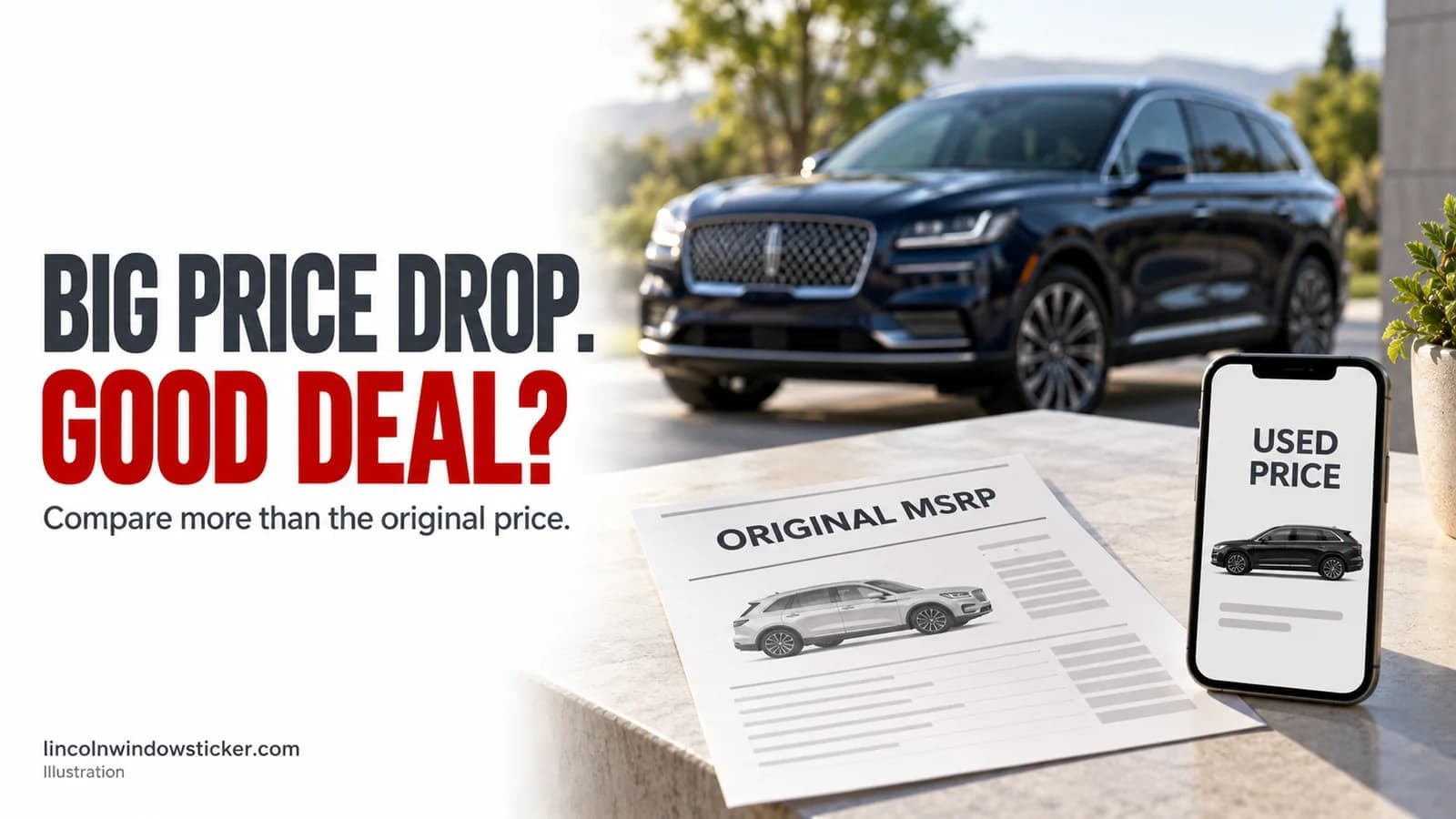
Some used Lincolns cost much less than their original price because of depreciation, mileage, condition, and what buyers will pay for that model today. A high original price can make the dollar drop look especially large. It does not automatically mean the vehicle has a hidden problem, or that it is a bargain.
Start by checking the Lincoln window sticker, then compare the asking price with similar used Lincolns. Use a history report and inspection to investigate differences that the equipment list cannot explain.
Key Takeaways
- Original MSRP is a historical reference, not today’s market value.
- A window sticker helps confirm which equipment and options contributed to the original price.
- Judge a low asking price against comparable vehicles, documented history, and likely ownership costs.
First, Check Which “Original Price” You Are Comparing
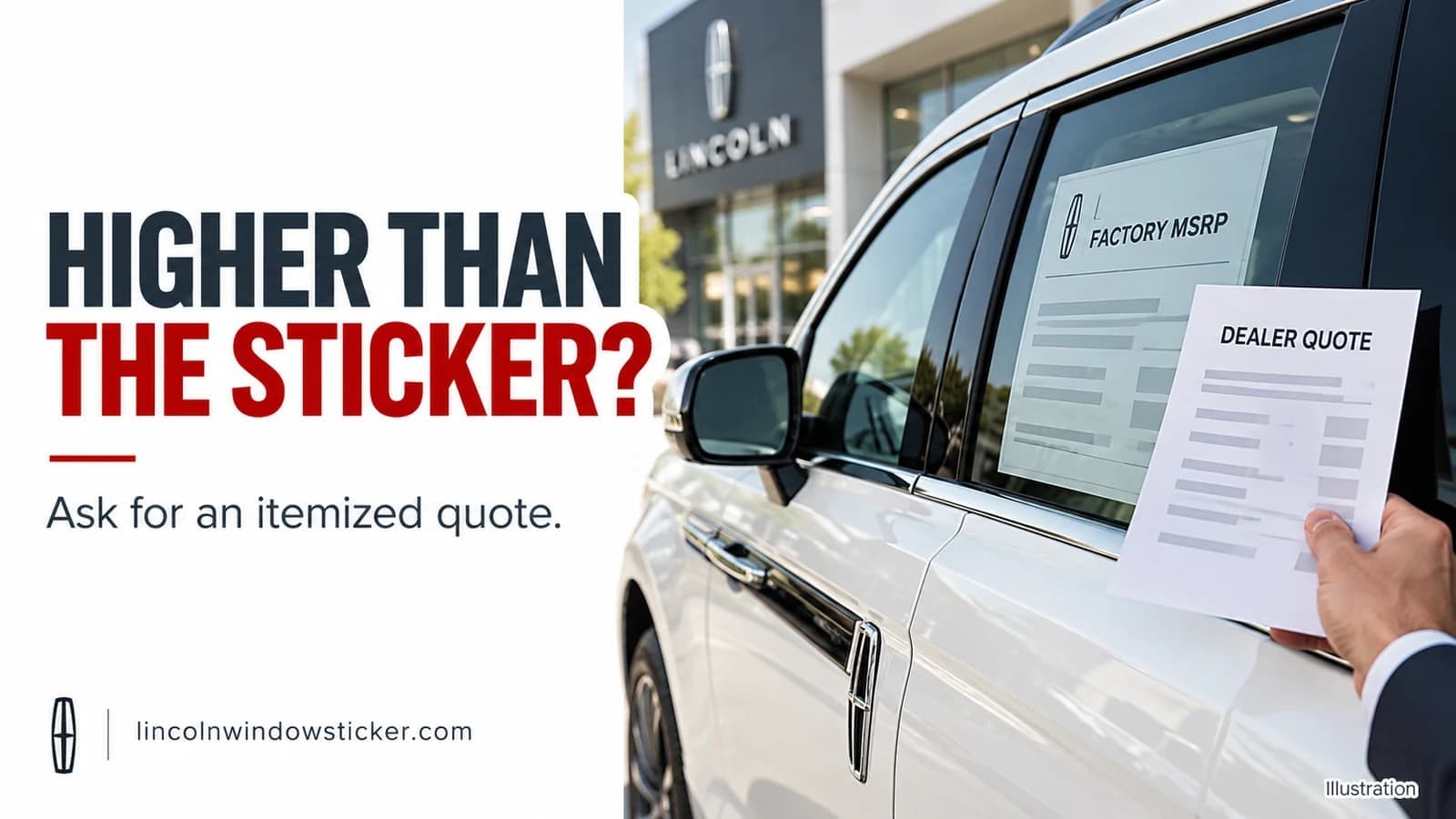
An advertisement saying “originally $70,000” needs context. The seller may mean the factory sticker total, an advertised starting price, or what someone actually paid.
| Price Term | What it Means? | How to Use It? |
|---|---|---|
| Base MSRP | Suggested price before separately priced options and charges | Understand the starting configuration |
| Total sticker price | Suggested price for that vehicle, including listed options and charges | Check the original equipment and total |
| Original purchase price | What the buyer actually paid for the vehicle | Use only when supported by purchase records |
| Current asking price | What today’s seller wants | Compare with similar vehicles currently offered |
| Current market estimate | An estimated value for the vehicle and sale type | Check its date, location, mileage, and condition assumptions |
← Scroll horizontally to see more →
Note that dealer prices can differ from MSRP. The window sticker therefore cannot establish the first owner’s actual purchase price. Also keep the vehicle price separate from taxes, financing costs, and other purchase expenses. Comparing an old total including those costs with a current advertised vehicle price exaggerates the apparent reduction.
Four Reasons a Lincoln Car Price Can Drop
These factors help explain a lower used price. Their importance varies by model, year, configuration, and individual vehicle; there is no single depreciation rate for every Lincoln.
Age and Mileage Change What Buyers Will Pay
A used Lincoln has accumulated time and miles since its original sale. Buyers assess its remaining usefulness, condition, and expected expenses rather than paying for the experience of owning it new. Compare vehicles of similar age and mileage before deciding that a large reduction from MSRP is unusual or suspicious.
A High Starting Price Creates a Larger Dollar Drop
The same percentage decline produces a bigger dollar difference on a more expensive vehicle. That can make a luxury Lincoln’s price reduction look dramatic. Separate the amount lost from the percentage change, and avoid treating either figure as proof of poor reliability or a uniquely good deal for today’s buyer.
Factory Options Do Not Set Their Own Resale Price
An expensive package can raise the original sticker total without adding the same amount to a used asking price. Its current value depends on buyer demand and condition. Use the sticker to confirm what was fitted, then compare similarly equipped listings rather than carrying every original option charge forward unchanged.
Condition and Buyer Demand Affect the Current Price
Service history, visible wear, needed repairs, and local demand can influence what someone will offer. Two similar Lincolns may therefore attract different prices. Check the actual differences instead of assuming the cheaper vehicle is equivalent. A seller’s asking price also remains a proposal, not proof of a completed market transaction.
What Lincoln Owners’ Discussions Can and Cannot Tell You?
In a Lincoln Forums discussion about Corsair purchase prices, owners described both buying used after depreciation and buying new below MSRP. These accounts show why the factory sticker and a buyer’s actual cost should not be treated as identical.
They are individual experiences, not verified transaction data or a discount available to every buyer. Use them to identify questions to ask:
- Was the quoted original figure MSRP or the actual selling price?
- Were discounts involved in the original purchase?
- Are the compared vehicles the same age, trim, and configuration?
Avoid applying one owner’s deal to an unrelated Navigator, MKZ, or Nautilus. The relevant comparison is the Lincoln you are considering and the alternatives available to you now.
How the Window Sticker Explains the Original Price
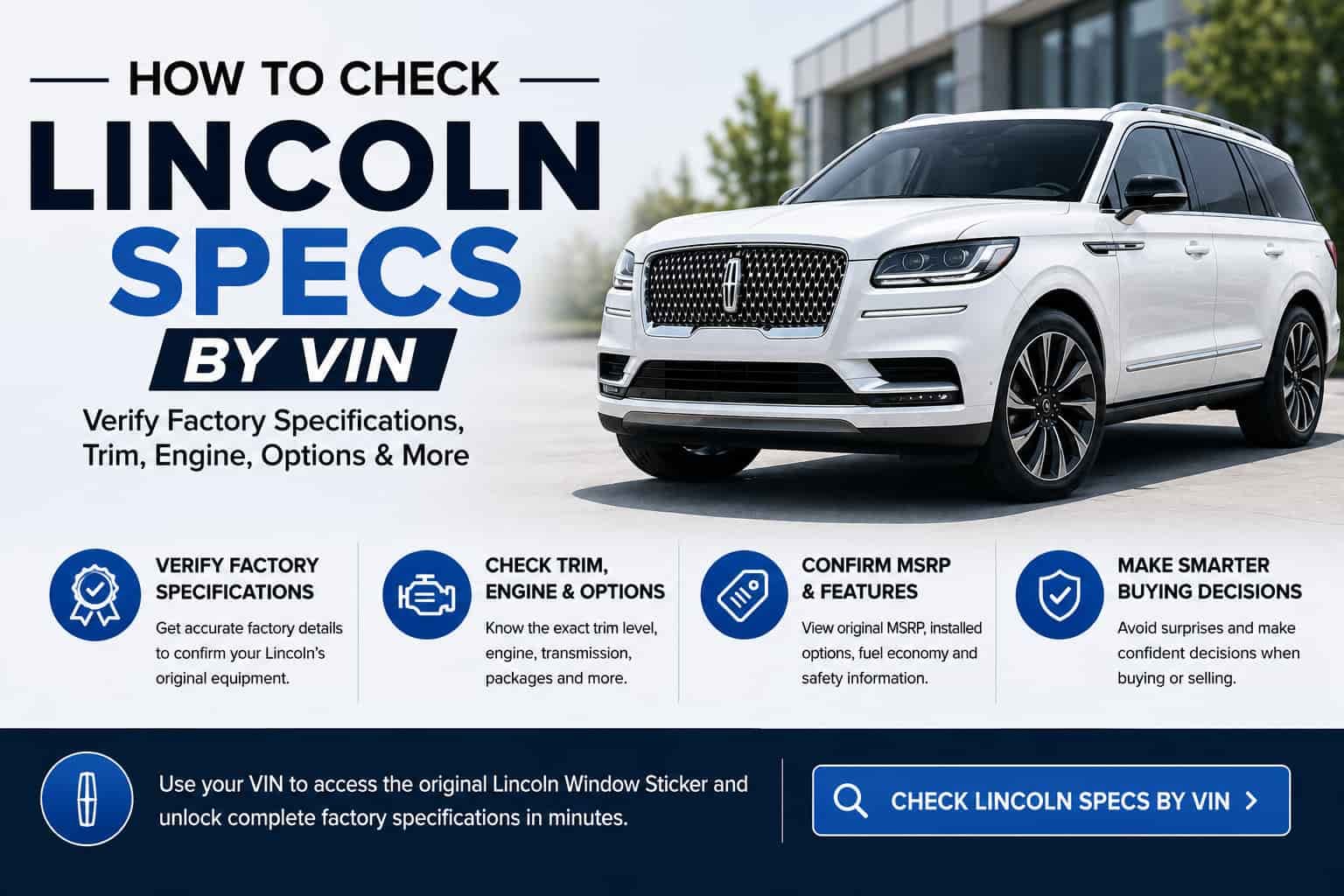
Getting the Lincoln window sticker by VIN can help establish the original pricing and factory configuration when the document is available. Match its VIN to the vehicle before using the figures. Focus on these fields:
| Sticker Detail | Why It Matters When Comparing Prices? |
|---|---|
| Model year and trim | Keeps a higher specification version from being compared with a different version |
| Engine and drivetrain | Helps distinguish vehicles that look similar in photographs |
| Priced options and packages | Explains which extras increased the original total |
| Destination and other listed charges | Helps reconcile the base price with the sticker total |
| Total suggested price | Provides the correct historical reference for that VIN |
← Scroll horizontally to see more →
Read the printed total rather than rebuilding it from a brochure. Packages can include several features, so adding individual items again can double-count equipment already included in a package price.
The sticker answers “What was this Lincoln originally equipped and priced with?” It does not provide an appraisal of its current condition or prove that the advertised features still work.
Why Half the Original MSRP Is Not Automatically Half Price (An Example)?
The following figures are hypothetical U.S. dollar amounts. They illustrate the calculation, not a valuation of any Lincoln model.
| Item | Illustrative amount |
|---|---|
| Base vehicle price | $52,000 |
| Factory options | $6,500 |
| Destination charge | $1,500 |
| Original sticker total | $60,000 |
| Current used asking price | $30,000 |
← Scroll horizontally to see more →
The difference is $30,000, or 50% below the original MSRP:
($60,000 − $30,000) ÷ $60,000 × 100 = 50%
That measures the gap between two prices. It does not establish a 50% saving against today’s market, and it does not reveal the original owner’s actual loss.
For example, if similar used vehicles currently cost around $30,000, this asking price may be ordinary. If comparable vehicles cost less, the large reduction from MSRP does not make this listing competitive.
Use the original price to understand the vehicle’s background. Use present-day comparisons to judge the offer.

Four Things to Check for a Fair Used-Lincoln Comparison
Compare the same kinds of vehicles and prices before negotiating. A short comparison sheet helps you spot differences that photographs and listing headlines can hide.
1. Confirm the Exact Vehicle Configuration
Start with the VIN, model year, trim, engine, and drivetrain. Check the window sticker for factory packages that matter to you. Do not assume two listings marked “fully loaded” contain identical equipment. Record any unresolved feature claims so the seller can confirm them before you compare the vehicles on price.
2. Match Mileage, Condition, and Sale Type
Compare similar mileage and condition, then note whether each vehicle is sold privately, by a dealer, or with documented certification. Avoid comparing a trade-in estimate with a dealer’s retail asking price. Those figures describe different transactions and can create a misleading impression of how much value the Lincoln has lost.
3. Read the Available History and Service Records
Review the history report for recorded damage, title issues, mileage entries, and previous use where available. Ask for maintenance invoices separately. A low price needs context, but missing records alone do not establish a defect. Identify which questions remain unanswered and share them with the professional inspecting the used Lincoln.
4. Compare the Written Total and Immediate Costs
Request a written purchase total and an inspection estimate for work needed soon. Include those amounts when comparing alternatives. A lower advertised price can become less attractive after fees or necessary repairs. Keep optional extras separate, and decide which costs apply to your purchase before calling one Lincoln the bargain.
Pro tip: Save each listing with its date, mileage, equipment, and asking price. Keep advertised vehicle prices separate from written totals that include taxes and fees.
When Does the History Report Matter More Than the Sticker?
If one Lincoln is priced well below comparable vehicles, investigate the vehicle-specific explanation. Use a reputable Lincoln vehicle history lookup service to check available records and confirm what the report includes before purchasing.
Prioritize:
- Damage and Repair History: Request invoices for disclosed work.
- Title Records: Clarify brands or conflicting paperwork.
- Mileage: Compare dated readings with the current odometer.
- Previous Use: Review recorded fleet, rental, or other use without assuming it proves poor condition.
A report supports the investigation; it does not replace an inspection or guarantee every event was recorded. If the seller relies on a clean title as reassurance, you can check how to know whether a clean title means a used Lincoln has never been damaged.
Budget for Ownership, Not Just the Purchase
A used price does not tell you what the next year of ownership will cost. Build a budget from the actual vehicle and your expected use.
| Cost to check | Practical next step |
|---|---|
| Work needed immediately | Obtain a written inspection and repair estimate |
| Tires and brakes | Check condition and price replacements if needed |
| Scheduled maintenance | Review service records and the applicable maintenance schedule |
| Insurance | Request a quote for the specific VIN |
| Fuel | Estimate costs using your mileage and driving pattern |
| Warranty or service contract | Read the actual coverage, limits, and exclusions |
← Scroll horizontally to see more →
Do not assume an inexpensive used Lincoln will be inexpensive to maintain. Equally, avoid assigning every Lincoln the same repair budget. Equipment, condition, maintenance, and usage differ. An original sticker’s warranty wording describes the coverage offered when new. Verify any remaining coverage separately rather than assuming it restarts with your purchase.
Signs of an Explainable Price Versus an Unresolved Concern
Use this table to decide what deserves another question. Neither column replaces examining the actual vehicle.
| More understandable price difference | Something to clarify before proceeding |
|---|---|
| Higher mileage than the alternatives | Mileage readings that do not agree |
| Fewer verified factory options | Expensive features advertised without supporting evidence |
| Documented wear with a repair estimate | Seller dismisses visible problems without explanation |
| Price similar to matched local listings | Price far below matched listings with no clear reason |
| Clear records and inspection access | Refusal to allow an independent inspection |
← Scroll horizontally to see more →
A low price is a reason to investigate, not a diagnosis. If the seller cannot explain an important discrepancy, a larger discount does not supply the missing evidence.
Your Next Step
Check the original sticker, compare similar used Lincolns, and price any immediate work before making an offer. Keep a short record of:
- Comparable asking prices.
- Verified equipment and condition differences.
- The written purchase total and expected immediate costs.
Choose the vehicle that fits your needs and budget. A large drop from MSRP is background information; the condition and current alternatives determine whether the asking price makes sense.
FAQ About Why Some Used Lincolns Are Cheaper Than Their Original Price.
Does a lower price mean the Lincoln is unreliable?
No. The price alone cannot establish reliability. It may reflect age, mileage, equipment, demand, condition, or the seller’s circumstances. Research the specific model year, review maintenance records, and arrange an inspection. Use those findings to assess the vehicle rather than treating a large reduction from its original MSRP as evidence.
Can I use a newer Lincoln’s MSRP for comparison?
A newer model’s price is not the original price of the used vehicle. Equipment, design, and pricing can change between model years. Find documentation for the actual VIN where possible. Use newer vehicles as alternative purchases, comparing their features and total costs, rather than substituting their MSRP into depreciation calculations.